

Keto 🥑 Diet

Foodtech platform for creating individual
keto diet rations
Industry
Expertise
Design and development of MVP platform
Development period
2019
About the project
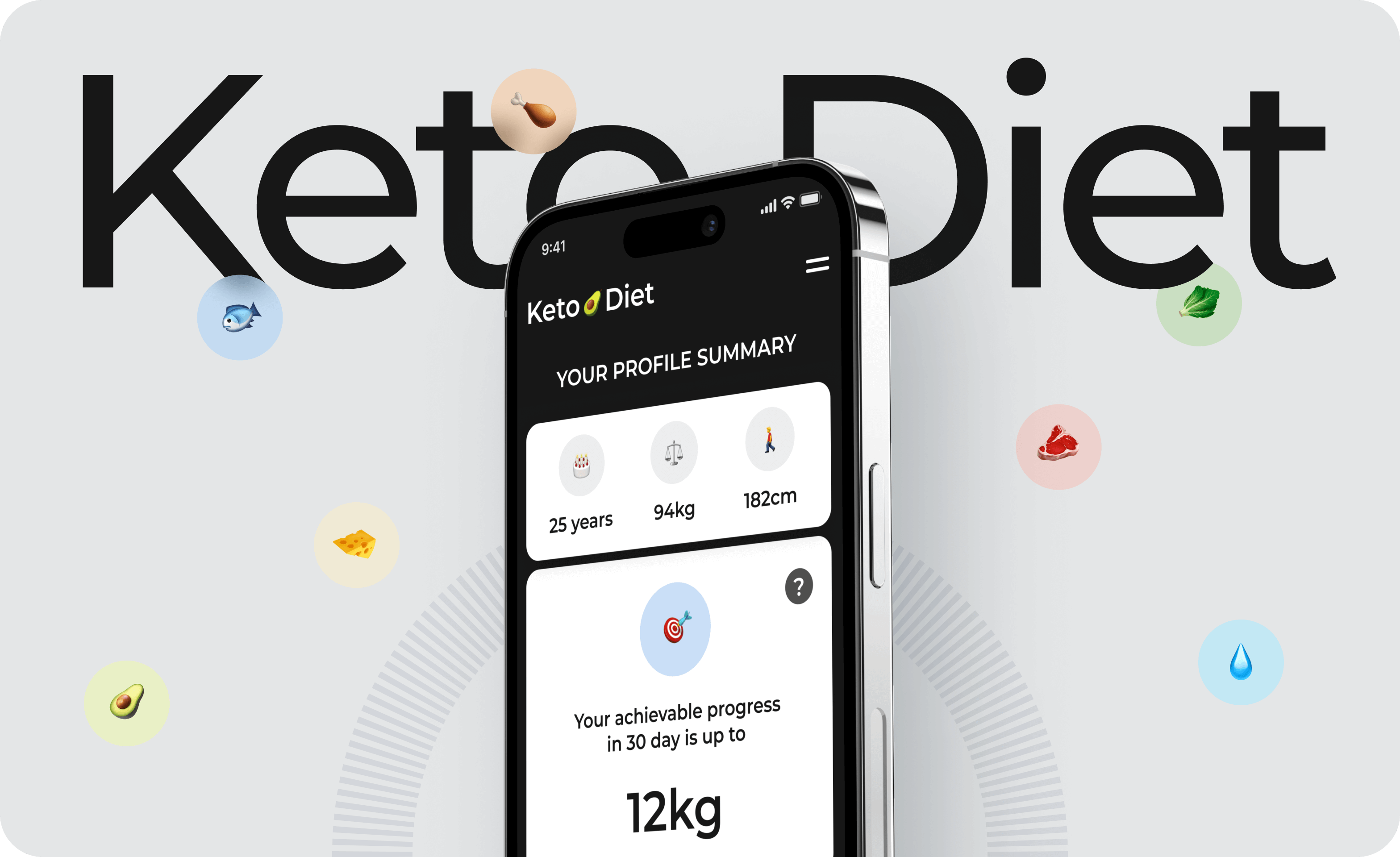
Keto.diet is a food tech platform. It's based on the concept of "Keto" — a diet with low carbohydrates and high protein, and healthy fats. A person starts losing weight through diet, carbohydrate deficiency, and minimal physical activity such as walking or doing simple exercises.
It's a stress-free diet with enough healthy fats, proteins, and vegetables for balanced nutrition.
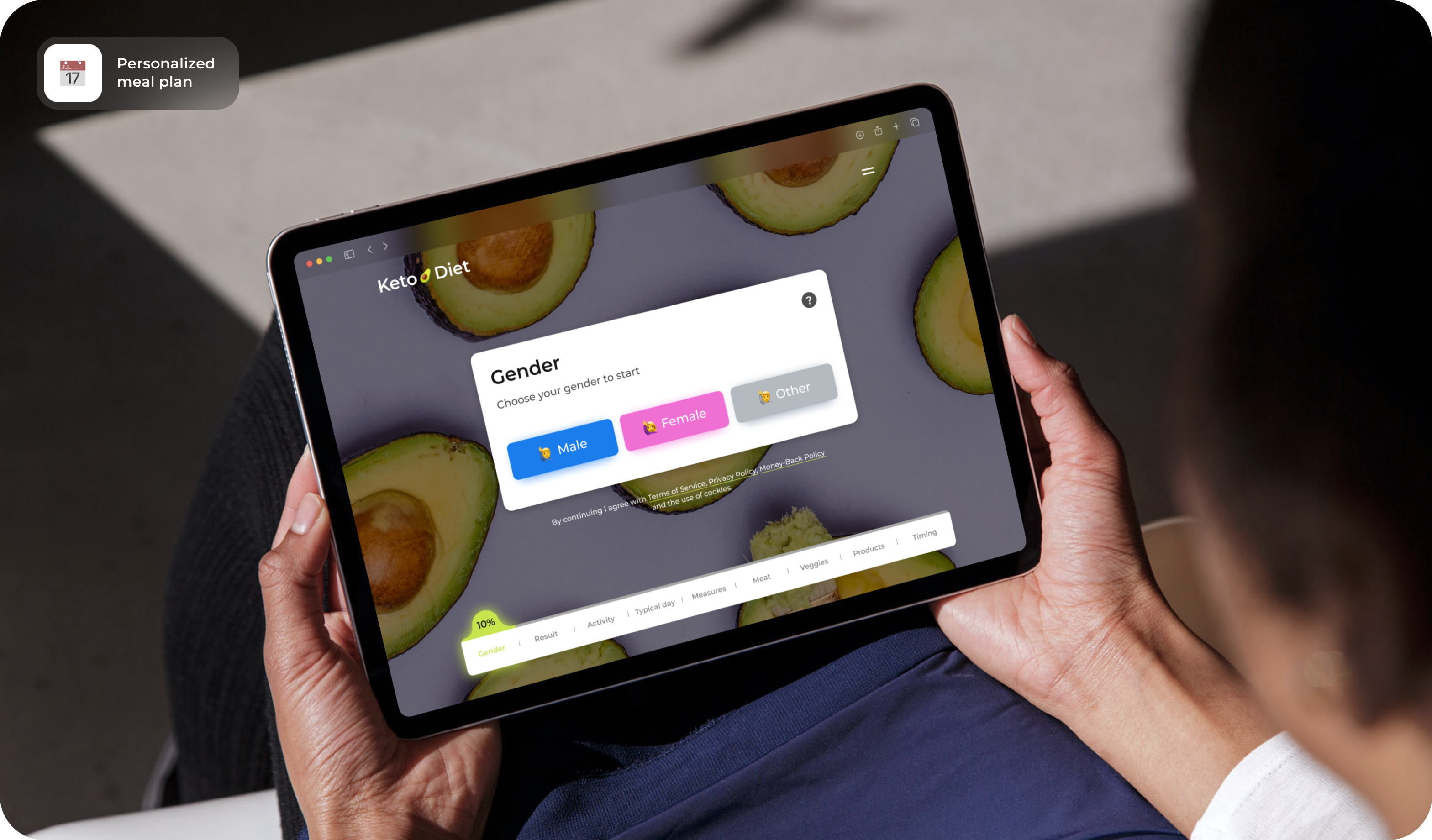
The platform allows users to create a diet based on their needs: whether they want to lose weight or build muscle mass. All you need to do is pass a test of several questions. Then, the algorithm will do the rest.
The backend logic is in charge of creating the nutrition
plan. It works like this:
- To get a diet, the client takes a quiz on the main page. In the quiz, they indicate their age, gender, nutritional preferences, and level of physical activity.
- The answers to the quiz are sent to the server. Then, it gives out an individual plan for 3 months.
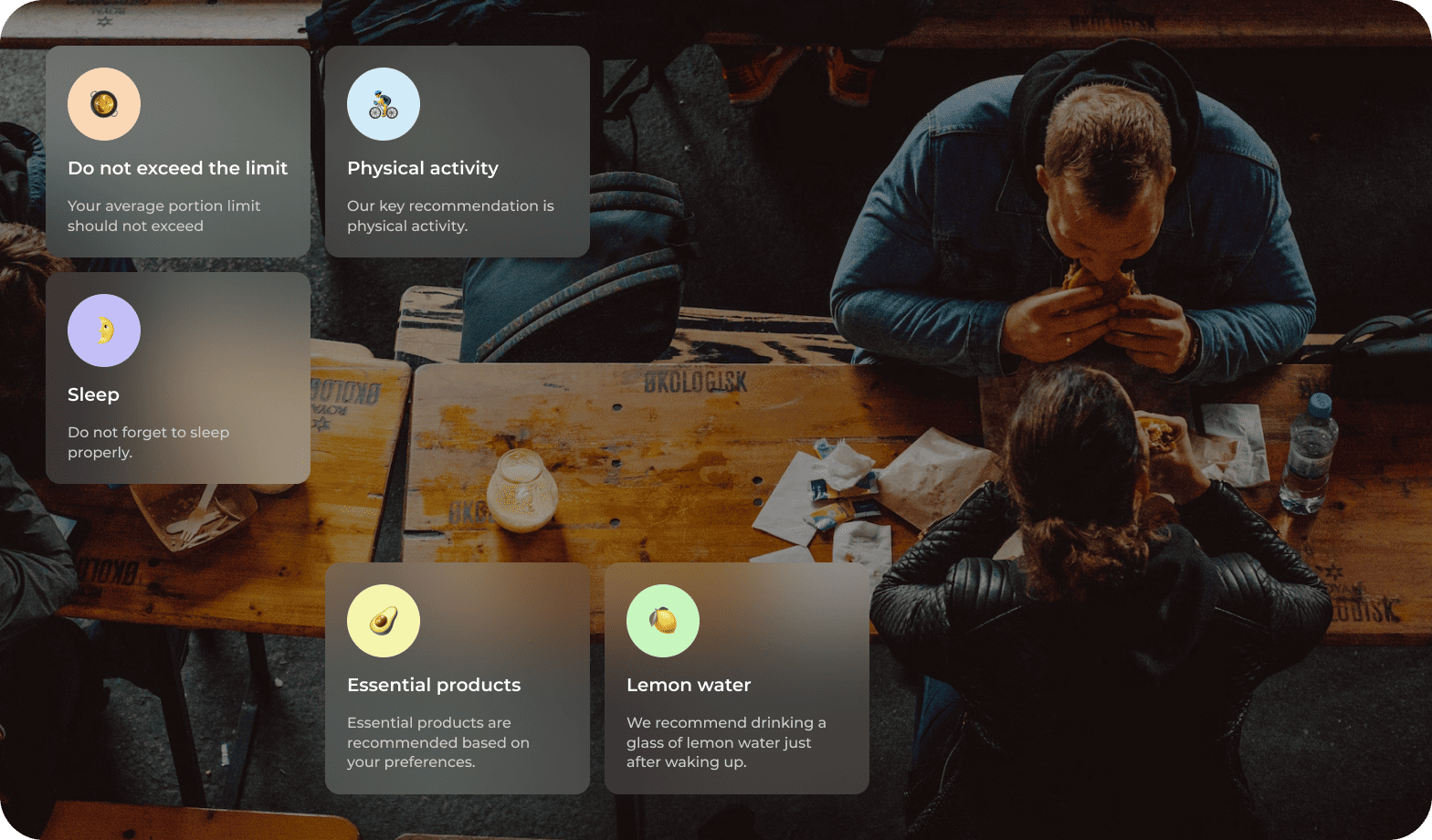
The includes meals, recipes, physical exercises, and a personal water limit. If users are satisfied
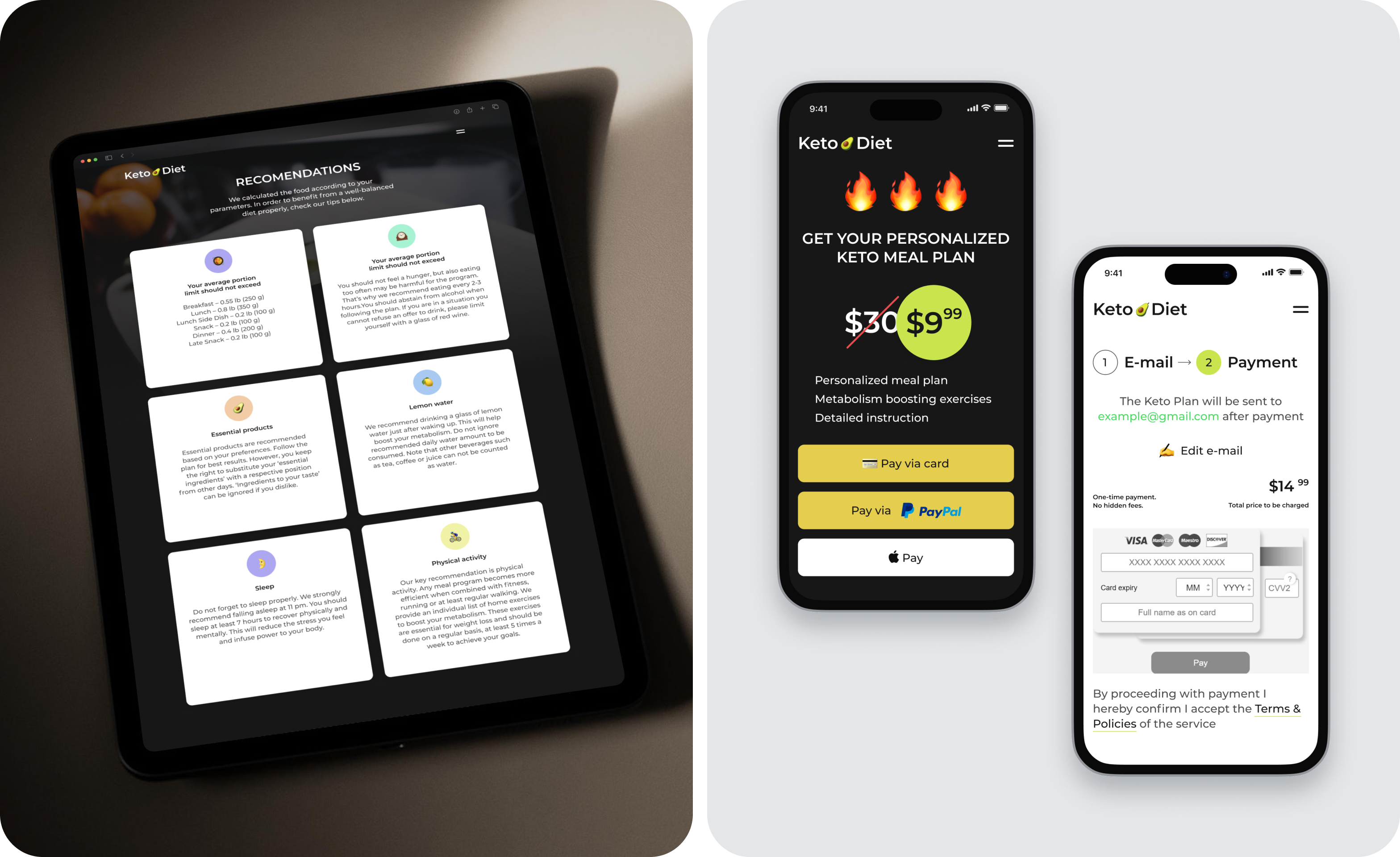
with the diet, they pay the subscription fee and receive the plan by email.
Assignment
The Keto.diet team planned to create an MVP platform to test the idea and get the first results. Once the results are satisfactory, the team will start further product development.
Goodface needed to:
- Develop a concept and design for Keto.diet MVP platform.
- Create a server-side algorithm for individualized diet development.
The dishes should be matched with the client's answers. Then, the algorithm can analyze the test answers and select the required diet plan.
Professional nutritionists developed the recipes. Although, the meals were selected from different
foods to meet the tastes of all audience segments.
The plan is unique for each client. For example, it considers that someone needs fish and doesn't eat
meat or eggs. There is an excellent selection of salads as well.
Platform concept development
During the brief, we realized that the Keto.diet team had a marketing concept — a platform with keto meals for a healthy diet. In addition, they had examples of other companies and products.
However, the references were mostly related to bodybuilders rather than average people
— the ones not going to the gym.
This audience has a particular problem today: people don't have 15 minutes for a healthy lunch. So we suggested adjusting the platform concept for ordinary people without marketing tricks.
We agreed: marketing hypotheses are up to the client's team, and Goodface duty is to create the platform. So we change only those things that, in our opinion, will improve
the product.
We started the first phase of product research. Together with the client, we developed
and agreed on the technical task, according to which we could create several
platform design concepts, a prototype, and the first screens.
Platform design
We created two design concepts for the future platform. The visual part with custom illustrations. More straightforward concept based on emojis 🥑 ❤️
The first option turned out to be overloaded with images. The concept distracted from the main steps:
pass the quiz, pay, and receive the plan. Thus, we settled on the second design concept with photos
and emojis. It was straightforward and clear for users.
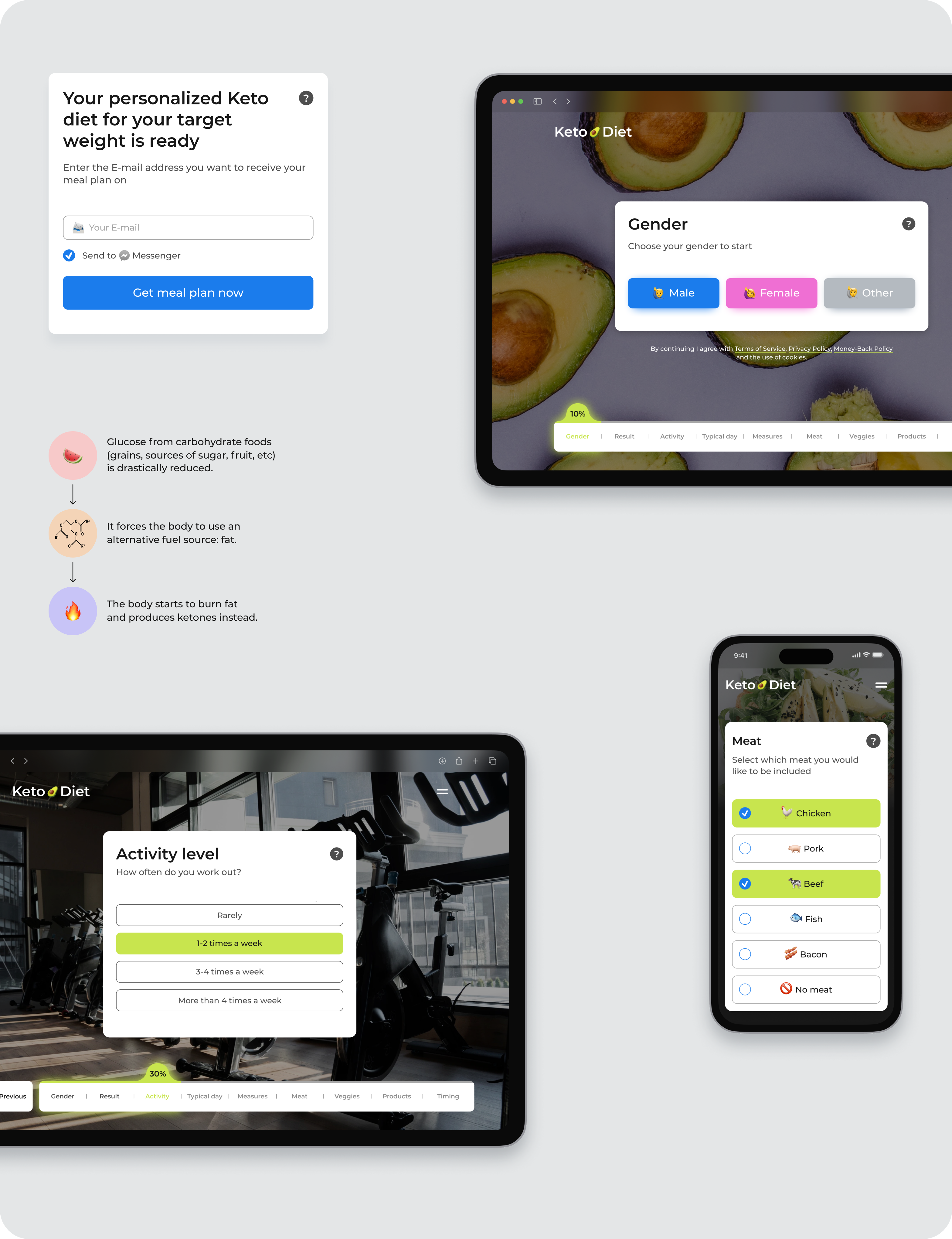
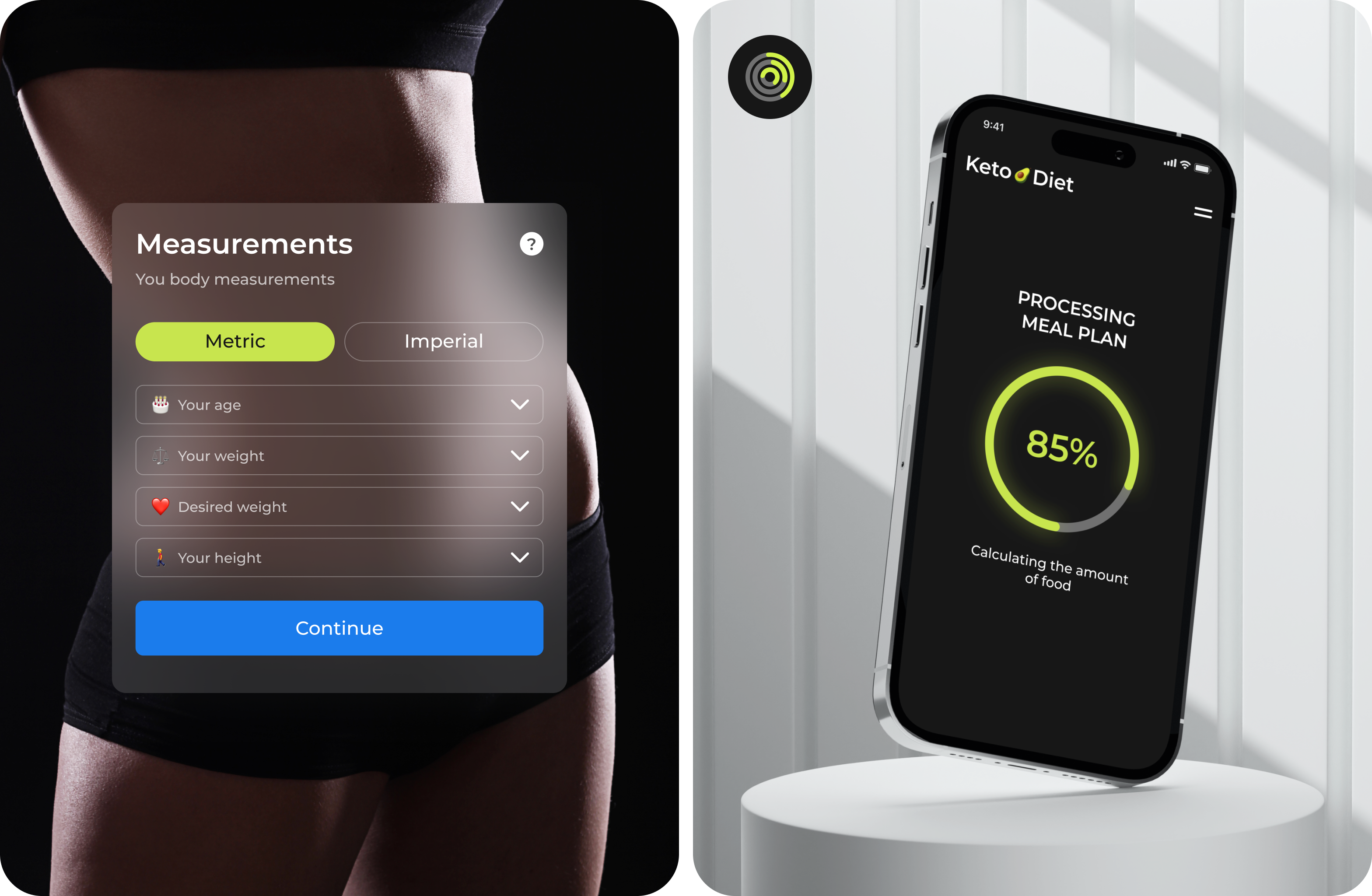
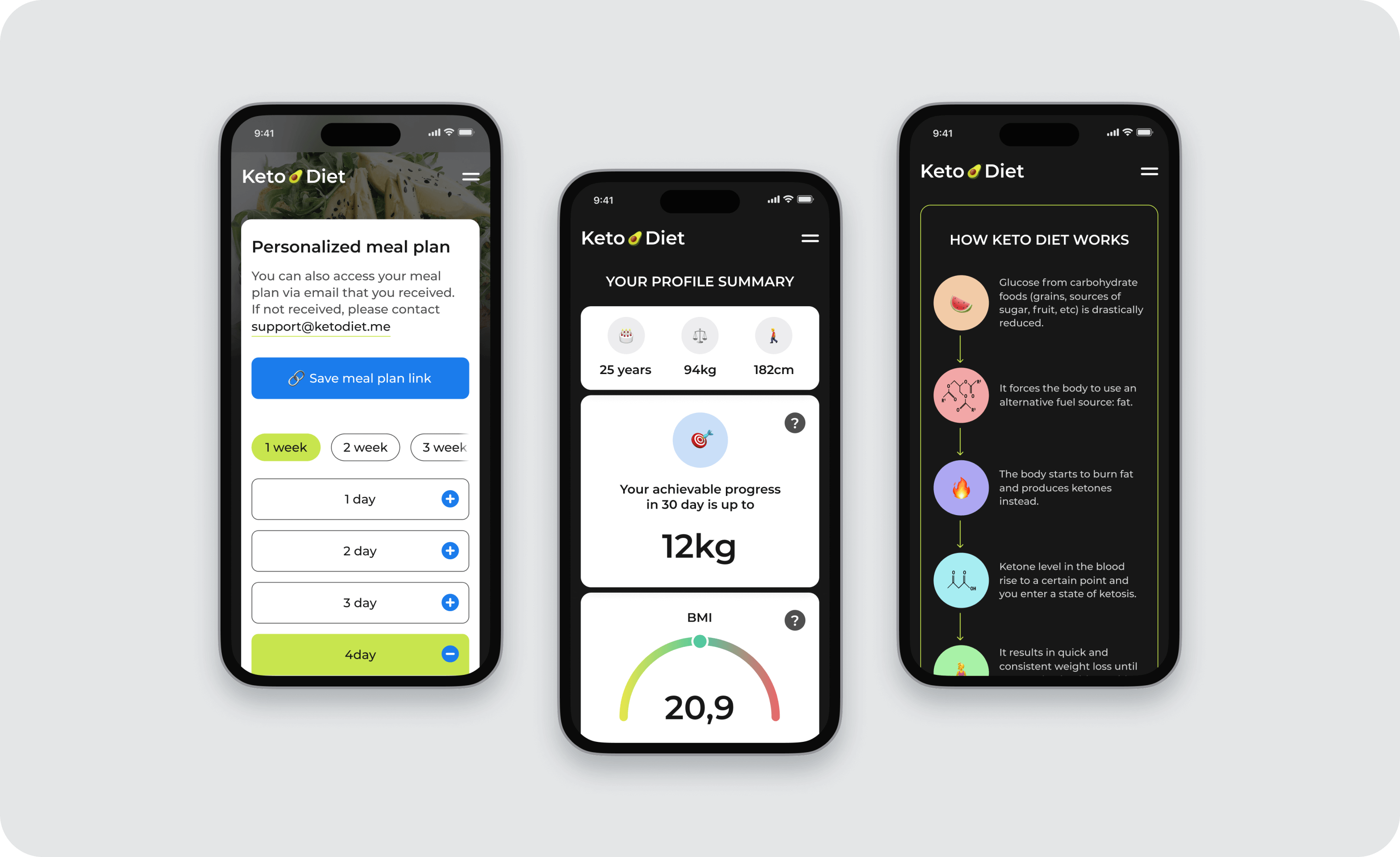
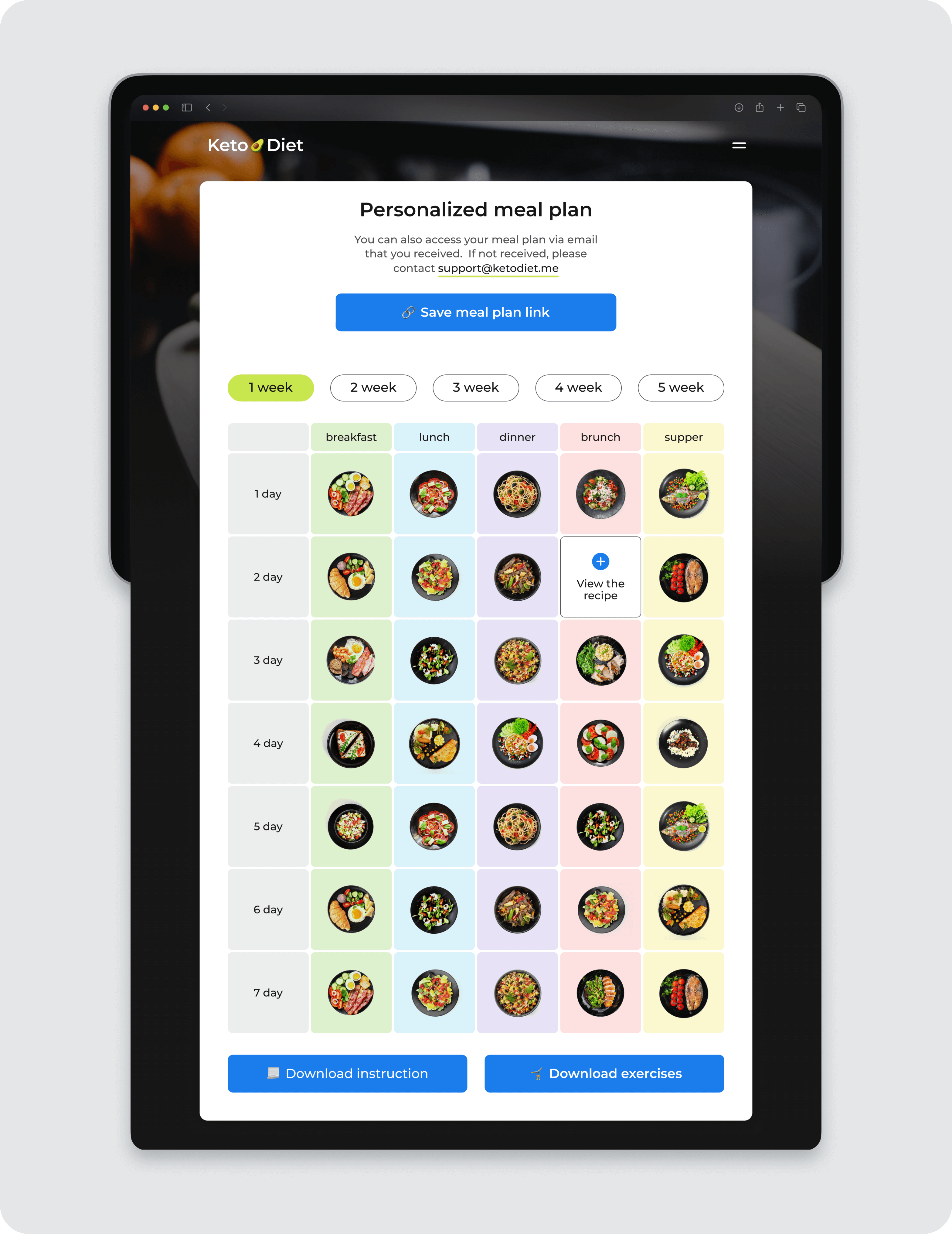
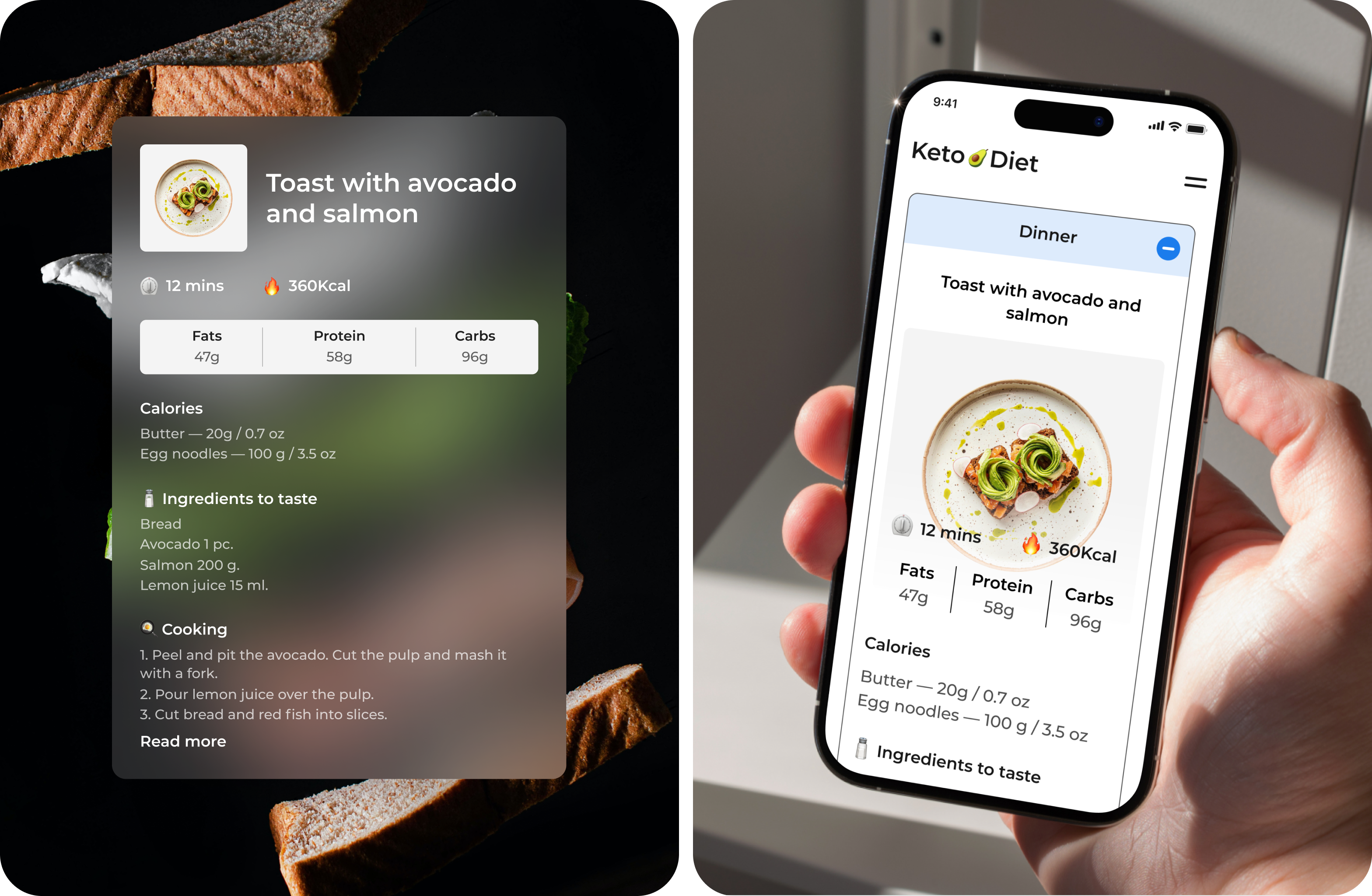
After that, we made a prototype of the site. It included quiz pages, diet examples, and interactive tips for each question. In addition, a separate page of the website is dedicated to diet details, warnings, and tips.
The final design didn't distract users from the quiz. Instead, it's minimalistic,
with detailed questions and intuitive hints.
Back-end logic of the platform
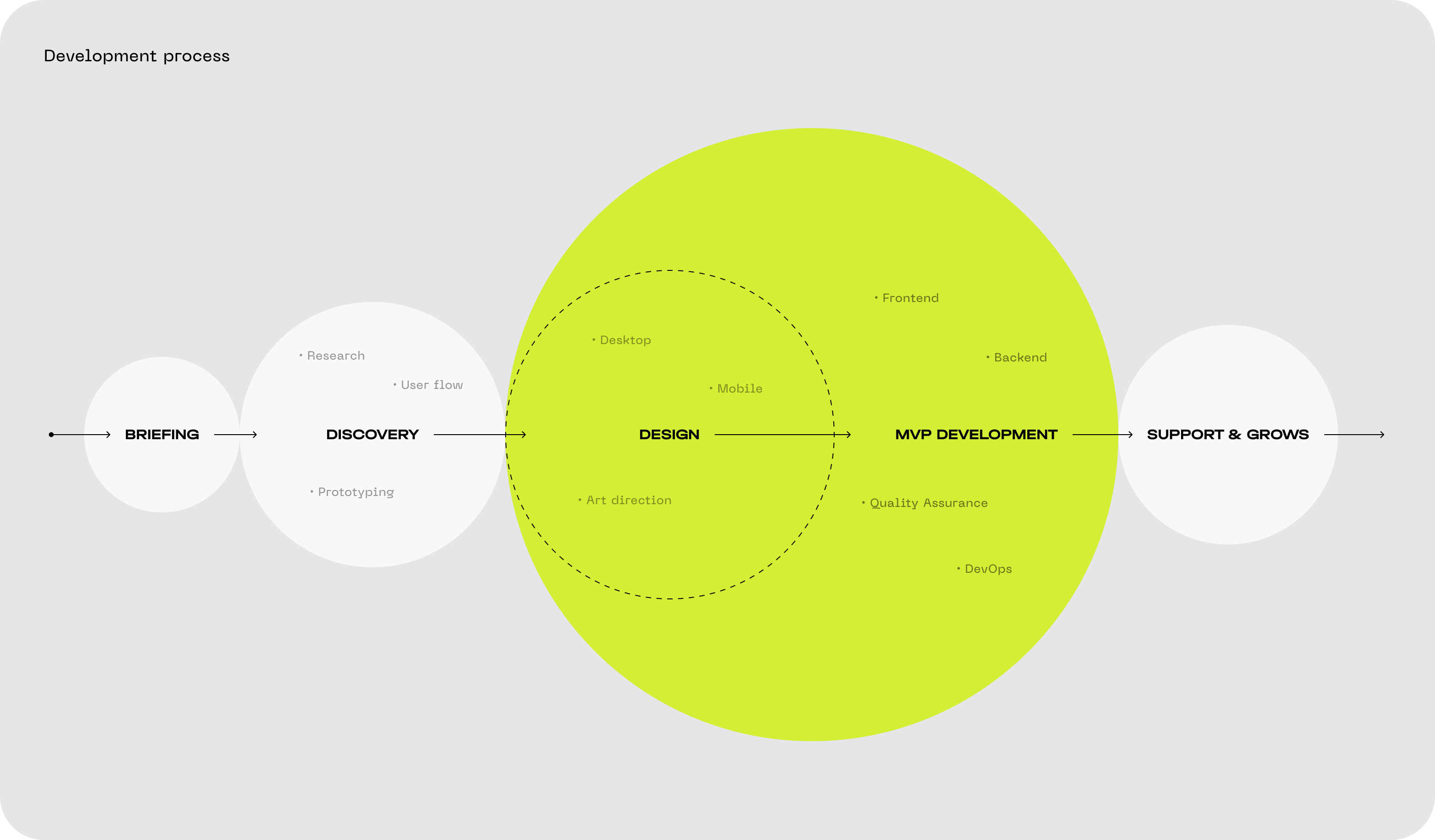
The most challenging task was to create an algorithm for the diet. Here's how the back-end logic works:
- The user passes a quiz;
- The results are sent to the server;
- Based on the results, the algorithm selects dishes;
- It creates a plan for 3 months;
- The user receives the meal plan by mail.
The success of the platform depends on the algorithm. The data server and back-end logic replace natural nutritionists and trainers.
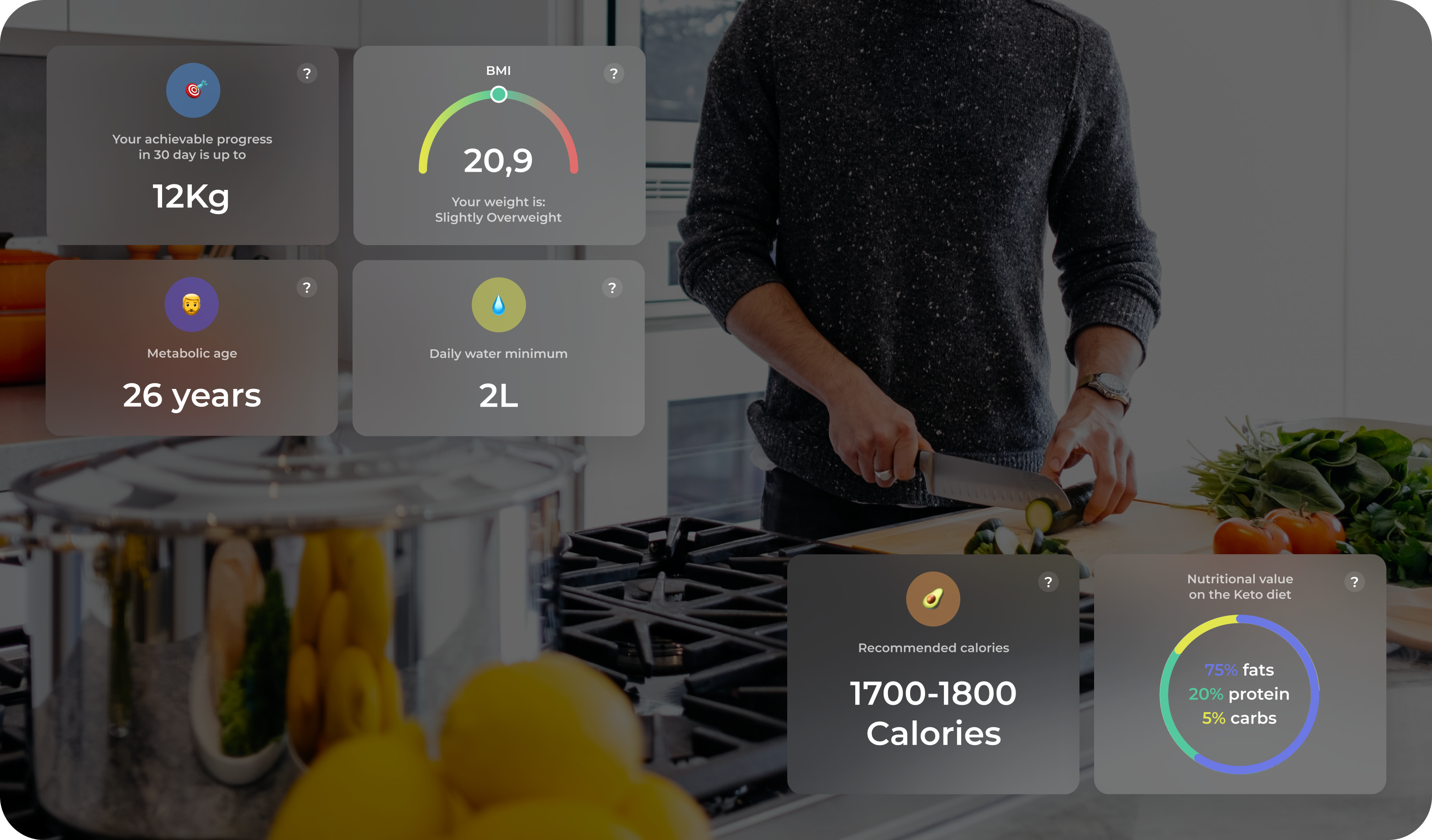
Getting a diet was half the battle. It still needed to adapt the algorithm to the client's needs.
For example, the diet should not be tedious.
New features
We developed the design, prototype, and server logic in three months. Finally, the client was satisfied with the result and started testing marketing hypotheses.
The hypotheses showed the client successful features and opportunities that could improve the product. Therefore, we gradually added them to the platform. For example:
- The ability to change the meal plan. The server will email a modified meal plan if a person wants a new one in a month.
- We added rations for weight gain. Previously, the platform had weight loss diets. The number of target audience groups has increased.
- We localized it by adding several languages.
- We created a subscription option.
- We added more questions to the quiz. Marketing research has shown that people are more likely to subscribe to paid rations with more questions.
- The server was loading from the audience flow. That's why we improved it to withstand a larger audience.
- We also implemented a platform auto-clean to empty storage from not used plans.
The results
We've been improving the platform for two years in a row. This is how the platform moved from MVP to a full-fledged product.
Through Goodface and Keto.diet's marketing tandem, the platform reaches $1 million in revenue and 100,000 monthly users. The result took a year and a half: six months to test hypotheses and a year to develop a marketing strategy.
Results of the MVP
After three months of work, the client received a ready-to-launch platform. The Keto.diet team launched the first advertisement. After another three months of research and testing, the project took off and brought in its first revenue.
The client covered the cost of the MVP in the first year of the project's existence.
Product development
After two years of work, the client recruited his team to work on a new food tech platform. Keto.diet intended to move from MVP to a different concept.
The keto.diet team now has their own product with a different name but a similar concept. From a team of three specialists, keto.diet grew to 120 people: marketers, developers, designers and analysts.
Other projects
Uvitme
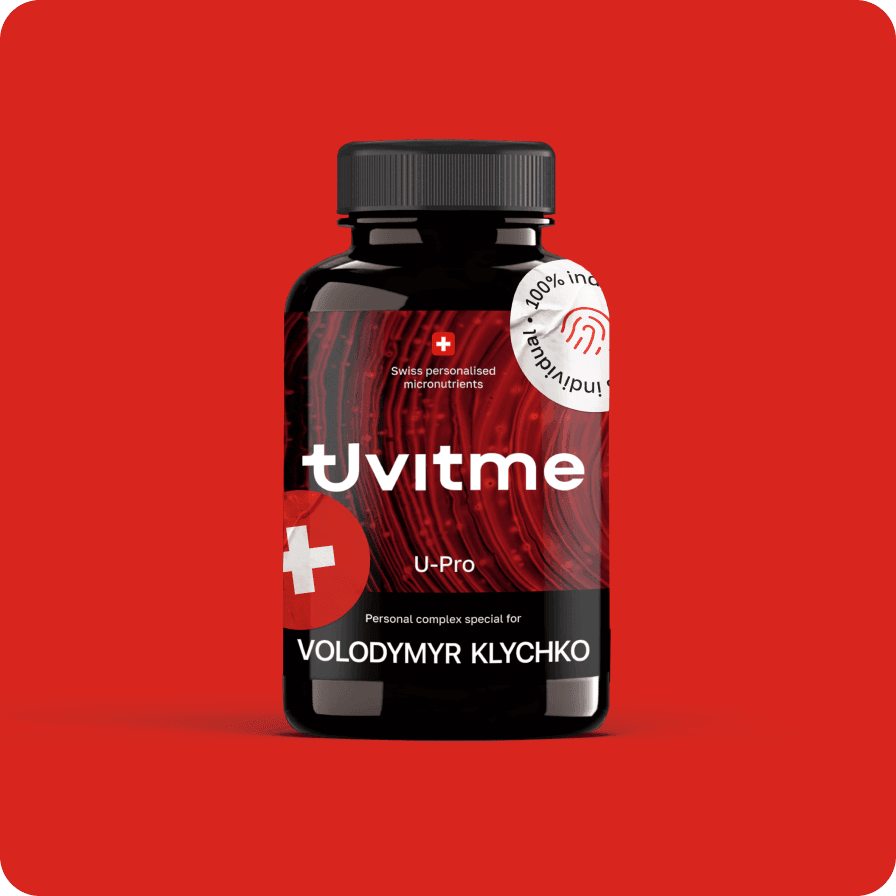
Website development and identity design for a manufacturer of individual vitamin complexes from Switzerland


the best experience for your business together
 go to Upwork
 © Goodface 2026